Nathan Creech is president of the Americas Division for Dublin-based building materials giant CRH. Opinions are the author’s own.
As a bipartisan team of lawmakers advances housing reforms that help lower costs for American families, one critical prerequisite to home construction is often overlooked: the infrastructure that makes homes livable in the first place.
Roads to reach them. Water systems to serve them. Energy to power and heat them.
Investment in our country’s core infrastructure — alongside other solutions like zoning reform, workforce development and incentives for first-time buyers — present a powerful opportunity to confront our nation’s housing crisis head-on.

Today, America faces a home affordability challenge four decades in the making. The median home now costs five times the median household income, according to the Joint Center for Housing Studies at Harvard University. The share of first-time homebuyers has fallen to a record low of just 21%, according to the National Association of Realtors. And over 22 million renters are cost-burdened, according to JCHS.
Closing our nation’s four million home gap will require building in communities across America, including suburban, small-town, and rural markets where growth is strongest.
Roads to the future
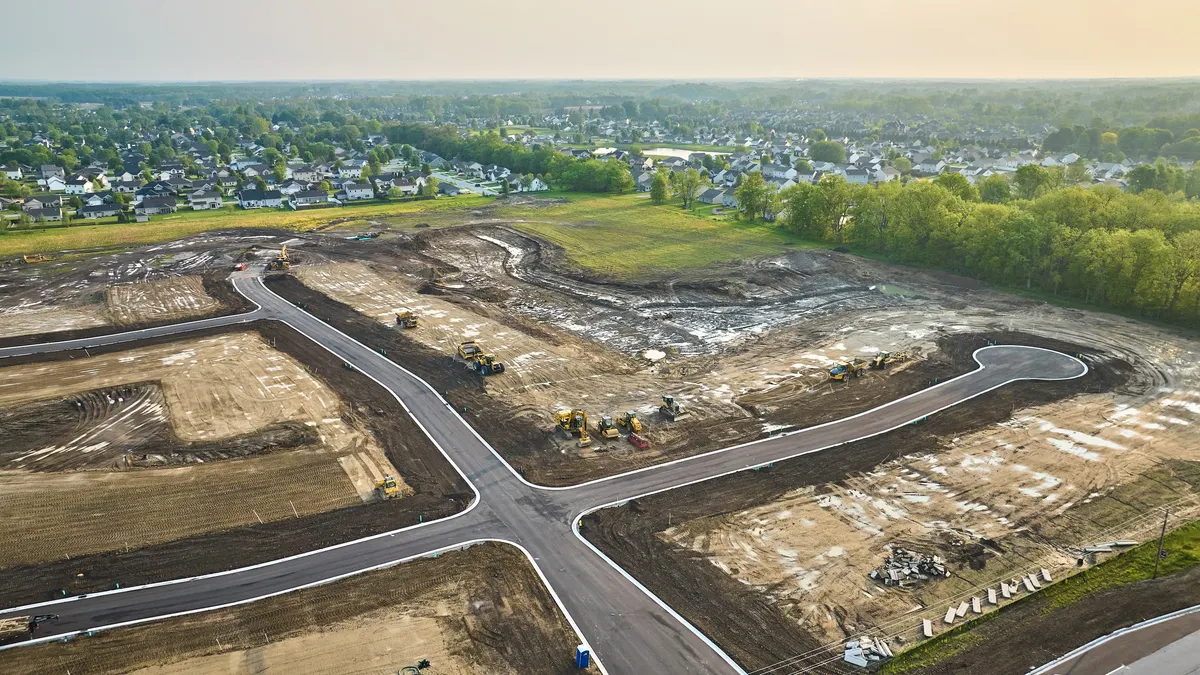
In many of those areas, however, the necessary infrastructure simply does not exist. Roads are at capacity. Water and sewer systems are decades out of date. Permitting backlogs for infrastructure connections stretch for months. Builders cannot break ground on homes until the pipes are in the ground and the roads are paved.
As one example, in fast-growing Sun Belt markets, developers routinely wait 12 to 18 months for water and sewer capacity. In Texas and Arizona, new housing projects are delayed or downsized because the road network cannot absorb additional traffic. Every month of delay adds costs ultimately borne by the homebuyer or renter, making housing even less attainable for those who need it most.
The federal government made historic investments in infrastructure through the Infrastructure Investment and Jobs Act. But inflation has eroded the purchasing power originally intended by those dollars, and the funding is set to expire.
If we are serious about addressing housing affordability, infrastructure investment must be explicitly linked to housing supply.
That means prioritizing capacity in high-growth corridors, accelerating permitting for water and sewer extensions and ensuring that transportation networks can support the communities of tomorrow, not just the communities of today.
Infrastructure investment also has a multiplier effect — every dollar invested in infrastructure generates broader economic activity.
When that infrastructure enables new home construction, the impact compounds, with more jobs, higher property tax revenue and the economic boost that comes with thriving communities. We can realize these benefits and help address the housing crisis with a three-pronged, infrastructure-led approach.
How to get there
First, let’s reauthorize federal surface transportation funding before it expires. The current authorization runs out in September. Congress must act now to ensure continued investment in roads, bridges and water systems — the infrastructure that helps expand housing supply.
A $600 billion, five-year commitment to core infrastructure, including roads, bridges, rail and ports, will allow states to prioritize capacity in high-growth corridors where housing demand is strongest.
Second, we can accelerate permitting and cut unnecessary red tape. In addition to permitting reforms for energy and transportation projects, let’s also find ways to speed up water and sewer construction. Municipalities need tools and staffing to approve connections in weeks, not years.
Third, let’s invest in the workforce that builds high-quality infrastructure. Roads, bridges and water systems require skilled tradespeople, but these workers are in short supply. Apprenticeships, vocational training and a clear pipeline from high school to the jobsite are essential to building the infrastructure that housing depends on. This is a priority for the American economy, so let’s make it a priority for American talent.
After World War II, America built a highway and water infrastructure system that enabled the greatest expansion of homeownership in history. That investment did not happen by accident. It happened because leaders understood that housing, and the American dream that home ownership represents, required a strong foundation of high-quality infrastructure. We need that same vision today.