

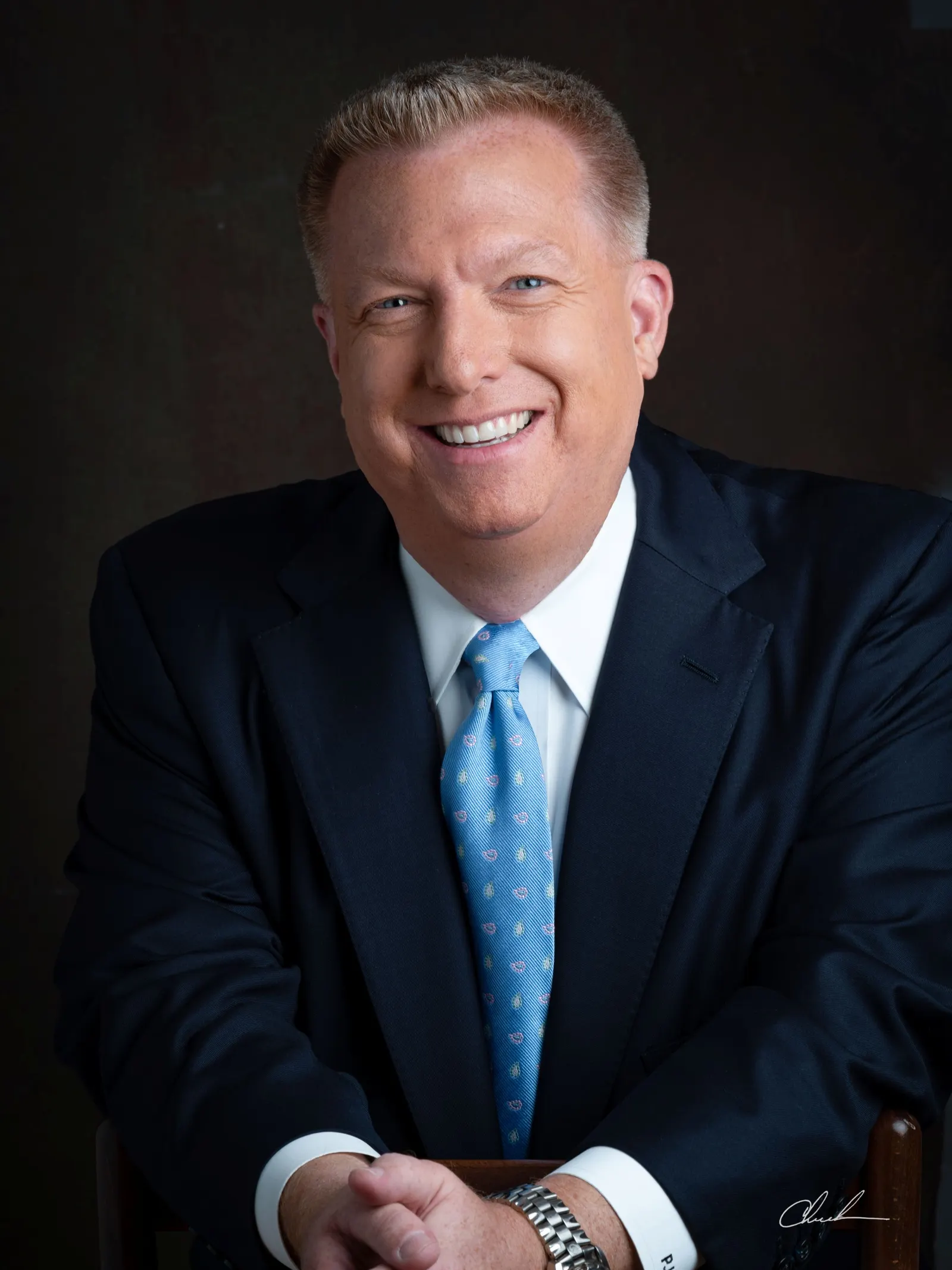
Peter O’Neil knows he’s got some listening to do.
An energetic speaker who enjoys tennis and travel, O’Neil has previously served as a chief executive for member organizations ASIS International, an association of global security professionals, and the American Industrial Hygiene Association, a group of environmental health and safety professionals.
Effective Monday, O’Neil is the CEO of the American Society of Civil Engineers. He joins the group as it plans ASCE2027, a major infrastructure and engineering conference to take place in Philadelphia next March.
He also takes the reins at a time where the U.S. has seen historic investments in infrastructure. Last year, the U.S. scored a “C” grade on ASCE’s infrastructure report card — the first and highest grade of its kind for the country in its history, which was previously stuck in the “D” range.
Here, Construction Dive talks with O’Neil on his experience, his views on artificial intelligence and his plans for the immediate future.
The following has been edited for brevity and clarity.
CONSTRUCTION DIVE: Why did you choose to pivot to work in the building industry?
PETER O’NEIL: I’ve always worked successfully — in particular over the past 20 years in two different CEO roles — with organizations either at inflection points and professions that sit at a crossroads of other professions, where we need the sum of many parts in order to get the work done.
I've always been interested in the built environment, in architecture, in how things get designed and built and then work for the people using it. For me, ASCE is an opportunity to be able to partner with all the myriad organizations to try to advance the industry at this time.
What are your day one priorities for taking charge of ASCE?
Well, first, I need to make sure my email works.
I come into ASCE with a certain bias. Bias by itself is not inherently a negative thing, right? The question is, what do you do with it? How do you manage it? That's how I look at it. I have quite a listening tour to do, which will help check and inform the bias I may come to ASCE with.
I want to look very hard and very closely at how we position our report card. I want to see how we can do things to make sure that we're resonating in the hallways that we need to resonate in. Those could be government hallways, those could be corporate hallways, it could be academic hallways.
What do you think about the state of construction as you assume the role?
From my perspective, this is one of those industries at an inflection point.
We have an aging infrastructure. You have what I might call funding momentum, or a lack thereof sometimes, and this rising notion of resilience and the expectations around resilience projects.
I think for ASCE, we've got to be the convener of the voices in the industry to help make sure that we're being heard in the halls of Congress and the state legislatures, but also globally, where it matters.
I tend to talk a lot about alignment both inside of an organization like ASCE, but also outside in terms of the issues and the education and the certifications that we try to promote as an association.
I think there needs to continue to be a tighter alignment between engineering and construction and public owners, because projects are expected to be delivered faster and smarter. In order to do that, we have to make sure we're continuing to talk to one another a lot and convening a lot to make sure that we're on the same page.
What are your thoughts on artificial intelligence and the role it can play in the industry?
I think AI is to be respected, and there's certainly an important role for AI to play in the broad space that contractors work in every day. ASCE is working on this from a practitioner perspective. We're certainly looking at this internally from an operations perspective.
I think AI is not something to be feared. In some ways, it feels like we're supposed to be afraid of it, and yet I think we shouldn't be. I think it's a new technology that, if harvested properly, can be and should be embraced. We should do that as an organization that represents engineers, civil engineers, but also as engineer practitioners.
How will your background as a leader at other organizations inform your role at ASCE?
I spent a great part of my career being a connector, being a strategic enabler and working effectively with boards and staff teams and volunteers all around the world to advance missions. I am a very KPI-driven, data-driven, bottom-line-driven professional. And I come to ASCE with a lot of experience and skills in strategic scenario planning.
I'm a culture-first builder when it comes to organization management. I'm very keen on making sure we have the right structure in place. I have a lot of operations experience. I speak the language of risk management, of resilience management, of safety and prevention through design.
I'm very familiar with some of the language already within the civil engineering space and the broader built infrastructure space. And I bring a lot of that experience to bear and time with an organization that is ready to move itself forward in new and meaningful ways.