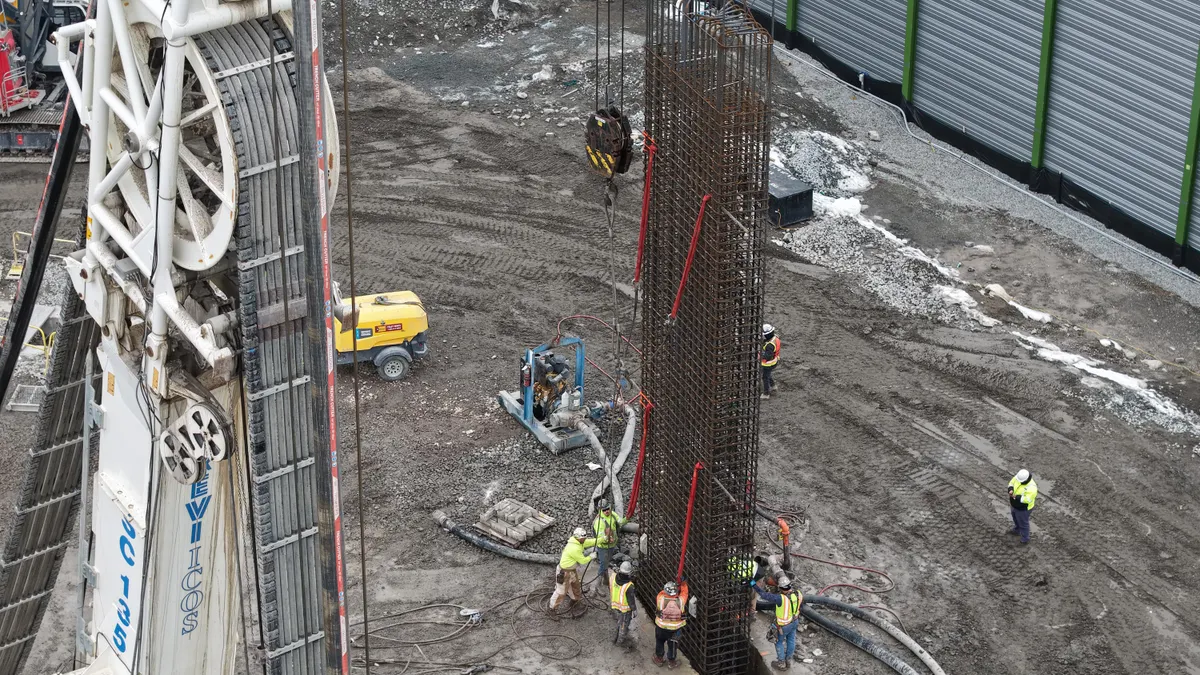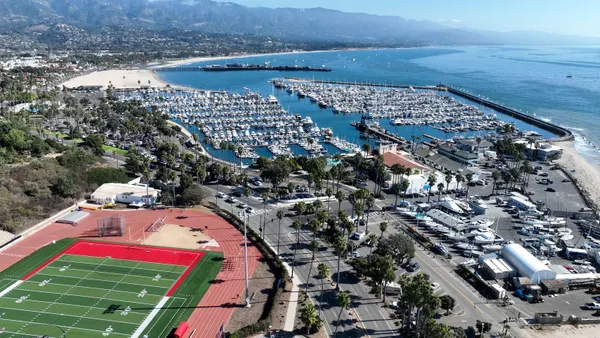
The Ohio DOT and Kentucky Transportation Cabinet have moved a step closer to addressing one of the busiest freight routes in the country with new construction.
The two transportation bodies have received approval from the Ohio Controlling Board, which oversees certain capital expenditures for the state, for authority to finalize construction plans on the $4.4 billion Brent Spence Bridge Corridor project, according to a March 16 news release from ODOT.
A new “companion” span will bridge the Ohio River immediately west of the existing crossing to provide an alternate connection between Covington, Kentucky, and Cincinnati. The new crossing and associated work are designed to transform multiple major thoroughfares between the Buckeye and Bluegrass states.
The finalized approval puts the construction coalition — led by a joint venture between builders Walsh Construction and Kokosing — on target to break ground this spring, according to the announcement. The Walsh-Kokosing JV was first tapped in 2023.
The project seeks to address the bottleneck of Interstates 71 and 75 in Kentucky, along with I-75 in Ohio, which is known as one of the busiest trucking routes in the country, according to the federal government’s permitting dashboard. It became a symbol of the $1.2 trillion Infrastructure Investment and Jobs Act following former President Joe Biden’s visit to the bridge in January 2023.
The existing bridge accommodates approximately 160,000 vehicles per day, double its designed capacity of 80,000 from 1963, per the permitting dashboard. It also handles $1 billion of freight per day, according to the announcement.
There’s a reason it’s a bottleneck — the traffic corridor is one of the main arteries through the Midwest, with its corresponding highways spidering out in various directions across the country.
The corridor connects Michigan to Florida via I-75, and routes local traffic to thoroughfares such as I-74, which stretches west to Iowa. Meanwhile, US-50 cuts east to west from Maryland to California on the Cincinnati side of the river. I-275, on the other hand, forms a beltway around the Cincinnati area.
According to the project page, to ease that congestion, the Walsh-Kokosing JV will:
- Build the new double-decker companion bridge to carry interstate and transport traffic.
- Improve the existing Brent Spence Bridge to carry local traffic to and from downtown Cincinnati and Covington.
- Upgrade eight miles of roadway in Ohio and Kentucky, including via a redesign of ramp configurations.
- Build new pedestrian and bike paths to connect different communities and improve access to transit stops and jobs.
“This project has been discussed for decades, and we are now at the point where plans are becoming reality,” said Pamela Boratyn, ODOT director, in the news release. “This project will make travel safer, strengthen the economy, and build a transportation system that reflects the importance of this region to Ohio, Kentucky, and the nation.”
Clearing hurdles
Perhaps the most prominent aspect of the March 16 announcement is the cost increase.
The $4.4 billion estimate is a $700 million increase from the previously reported price tag of $3.6 billion. That higher number includes previously completed design, engineering and demolition work, per the ODOT announcement. Going forward, the construction portion of the cost will be $4.05 billion.
Highway construction costs rose 61% nationally from 2020 through 2025, according to the FHWA’s National Highway Construction Cost Index, which was cited by the city of Covington in a March 17 announcement about construction moving forward.
“While national challenges are causing the cost of construction materials to rise, our teams are committed to still delivering on the promises made, while being fiscally responsible,” Kentucky Gov. Andy Beshear said in the city of Covington’s news release.
Funding for the project will be covered through a mix of state and federal dollars. The Biden administration awarded approximately $1.6 billion in federal grants to the project in 2022, made available through the IIJA. Other cash will come from KYTC and ODOT state revenues, financing or both, according to ODOT’s announcement.
ODOT expects the new companion bridge to be complete and open in 2031, with the approach work substantially complete by 2033, barring weather and schedule issues.