NEW YORK CITY — A single constraint may decide whether New York successfully captures the next wave of data center investment, according to a New York Build 2026 panel session.
The panel, comprised of designers and engineers in the construction industry, tackled one of construction’s hottest topics: the blistering build out of data centers across the country and how that trend is unfolding in New York. Speakers described a market full of money and momentum, especially as demand for artificial intelligence infrastructure skyrockets.
In New York, however, that demand is colliding with an aging electrical grid and a debate about how, or even if, the state should accommodate these types of facilities. That tension is leading to new types of data center developments.
“The opportunity is there because the investment is there, the desire is there,” said Kelly Bacon, vice president and data center market lead at Dallas-based AECOM. “We’re at a point in time where if you don’t make these upgrades you’re going to miss out on one of the largest infrastructure booms we’ve seen in our lifetimes.”
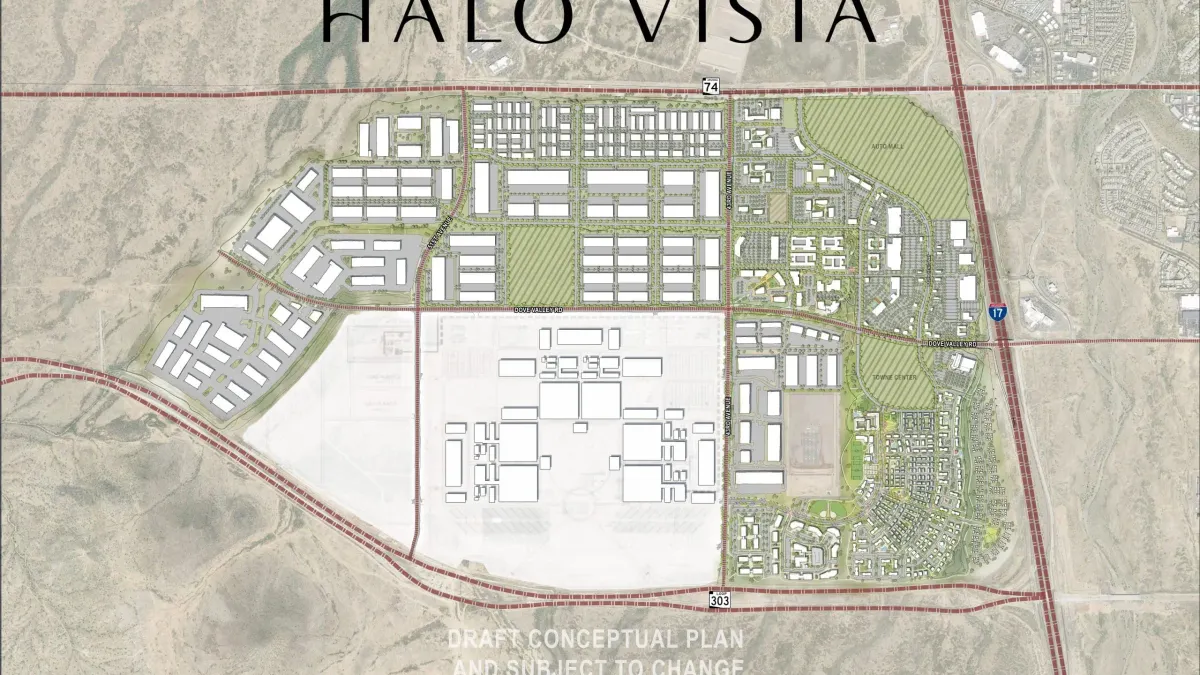
Strict environmental rules and public skepticism around data centers suggest New York will not anytime soon look like Northern Virginia’s Data Center Alley, the world’s largest concentration of such facilities. The city probably wouldn’t win many hyperscale projects in the short term anyway.
“In New York City, we’re not going to have a 72-megawatt [data center],” said Amy Schaap, VDC engineer at New York City-based Turner Construction. “Show me where?”
For construction industry executives, however, that may not matter, she said.
The right kind of data center
There are more data center opportunities besides the massive multibillion-dollar builds from Amazon, Meta, Google and other tech giants.
Instead, the city should target denser, more specialized facilities close to end users, speakers suggested. That includes builds such as smaller AI facilities, edge data centers, retrofits and colocation sites, where multiple tenants operate within shared infrastructure. Smaller builds open opportunities for firms that don’t have the budgets of the largest tech giants.
“There’s going to be a little more of a shift back to owning your own premises,” said Rob LoBuono, principal at San Francisco-based Gensler. “I think there’s going to be a shift toward owning your own AI model, and that’s going to be a much smaller building.”
Although the city’s “vertical” data center concept still faces some challenges, the growth of edge data centers, or these small-scale facilities, being built in the city is a trend to watch, said Bacon.
“Really intrigued by the growth of edge data centers, and there’s a lot of discussion about vertical data centers in New York City proper,” said Bacon. “It’s still early days, but we’re starting to see paths towards that.”
Traditional large-scale data center projects also exist outside of the city, especially in areas with land and legacy infrastructure, said Bacon.
“There’s quite an opportunity in Western New York. There’s a lot of existing infrastructure that can repurpose in cities like Albany and Buffalo,” said Bacon. However, she noted, “there are complications. There are strong regulatory and environmental compliance issues that we have to deal with.”
Powering the boom
Nevertheless, for the data center construction boom to truly extend to New York, developers will need to solve the power issue first.
For example, the largest industrial customer in New York currently uses roughly 270 megawatts of power, said Ned Allis, senior vice president at GFT, a Mechanicsburg, Pennsylvania-based engineering and infrastructure firm. A hyperscale data center, on the other hand, can demand about 1,400 megawatts at a single site.
That kind of load arrives at a moment when New York already has started to reshape its electric system to meet long-term climate goals. That means data center development will be as much about power as it is a real estate play, according to panelists.
“Well, unfortunately, I’m not seeing as many solutions as I’m seeing problems these days,” said Schaap. “Data centers are obviously very, very resource intensive. They take a lot of water, they take a lot of power, and so the community impact of that is intense.”
For that reason, Schaap pointed to liquid cooling and a more targeted system design to mitigate these needs. She also mentioned the renewed interest in small modular nuclear reactors. Bacon added demand for substations and related power infrastructure can run as hot as the market for the data center campuses themselves.
“We’re seeing the demand for battery and energy sources, systems and substations, as high, if not higher, than the data centers,” said Bacon.
Speed to build
To keep up, LoBuono identified prefabrication construction as more important than ever to New York’s data center ambitions.
“We have to preengineer, preplan, prefabricate quite a bit of our systems. In the building itself, we’re seeing a lot of prefabrication,” said LoBuono. “We’re actually seeing that as the only way right now to achieve the market speed that’s being driven in this economy for data centers.”
That speed-to-market is top of mind for designers and contractors. That’s important because ordinary failures can carry costly consequences on a data center project, said Dan Silva, senior consulting engineer at Simpson Gumpertz & Heger, a Waltham, Massachusetts-based engineering firm . A leak or air infiltration problem, for example, can jeopardize performance of the building in ways that an office or residential project rarely confront.
“For data centers, particularly building enclosure related things, it’s important to understand the risk,” said Silva. “If you get a roof leak that shuts down the data center that has massive implications. That means we really have to make sure we’re designing and installing high performing building enclosure systems.”
The push for prefab on these builds also helps alleviate pressures around workforce shortages, said Schaap. More modular strategies, she said, let firms concentrate work where labor and expertise already exist.
“We’re building a lot of data centers, frankly, in the middle of nowhere. There’s nothing, there’s no community,” said Schaap. “But if we can locate the actual construction and the expertise where the people are, we’re able to develop workforce more, and we can do it safer and quicker, and maybe in a place where the construction costs are not quite as they are in certain markets.”